Listen: “Does Your Chicken Have a Pépie” read by the author is also available to download from the Podcast page
I leaned on the fence feeling utterly defeated. The factory hum of bees in the Linden blossoms, the loudest interruption of the peaceful afternoon, went completely unnoticed. I wasn’t taking in any of the pastoral beauty spread out before me, as I watched my little flock of hens in the yard, lying in the shade of the walnut trees, or under the hydrangeas. Occasionally one would stagger to her feet, and peck half-heartedly at the grain on the ground, before sinking unsteadily back onto her breast.
Chickens and ducklings – photo Steven Kennard
My neighbour, Henri Roy, strolled up the lane, walking-stick in hand. He was a gnarled and stooped old farmer, of few words, who usually barely squeezed out the obligatory ‘Bonjour Madame’ before continuing on his way. This time, however, he stopped, lifted his stick, and aimed it at one of the ailing pullets. She’s not well, “Ça ‘ va pas, avec elle,” he said, rather unnecessarily, I thought. I agreed that no, she was not looking good. Continue reading →
The combination of a summer cottage by a lake and a couple of elderly and eccentric great aunts has an irresistible appeal to any child born and brought up in the city.
My own particular great aunts were two spinsters, Olive and Francis, born at the end of the 19th century in Jersey, Channel Islands, the children of immigrants who arrived with their family in 1903. They lived for the winter months in an apartment in Montreal that had been their home since their arrival, but they left for “The Lake” as soon as the weather began to smell of spring. They loved the primitive log cabin they had and the forest with its many and varied inhabitants that surrounded them there. Our rare visits to them changed our lives.
The Lake *
The drive from Montreal to this remote lake seemed to take all day. The car would finally pull up at a basic wharf – nothing more than a dirt parking area really – with a public telephone box for the use of any island or lakeshore inhabitants and a couple of posts to which a boat could be tied.
The car would be parked and we would all pile out to be with our father as he would stand on the shore, cup his hands around his mouth and shout “Woyup! Woyup!”, several times, across the still water.
Lake at sunset- Ellie Kennard 2015
This call must have been a special signal for some waiting ear, as after about 15 minutes, a small motor boat could be seen heading across the lake in our direction . We would be greeted by one of the aunts who would bustle us and our belongings on board. We would then chug our way back across the lake to their cabin. There was no other way to get there in the early ’60’s and this was for us a great part of the adventure of the visit.
We didn’t go to the lake often, but these visits fostered a deep love for the simple joys of the country. As we sat in the single log room in the house whose interior walls were covered with brown craft paper, or lay on the canopied swing in the screened off porch at the top of the long wide flight of wooden steps, smelling the forest all around us, we city children learned the value of silence and what it can bring in the way of gentle visitors – squirrels, raccoons, chipmunks, birds, snakes, frogs and the occasional deer. There was no electricity in the cottage so the soft glow of the oil lamp would cast just enough light for us to work at our drawings or crafts, or read our books.
The girls’ bedroom, whose walls were also covered with brown paper, relieved only by a single framed display of pressed flowers, had one high double bed with a lumpy mattress. This bed was covered with a puffy eiderdown filled with feathers and we girls piled into it together, giggling as the downy feathers in the cover puffed up around us deliciously warm and occasionally escaped through a hole in a seam, to float around the room. The boys had a similar room and bed for themselves. Along one wall was a dresser with a large porcelain ewer and basin which had a matching soap dish beside it. This had fresh, cold water put in it each day and we used the basin to wash our hands and faces.
Short tailed weasel pup – who posed very nicely for my camera.
Once there was a young girl who had a very lonely existence. She had no real friends and her family was not close. This meant that she spent much of her time in her room alone, reading and dreaming. Her great love was her collection of china horses. She dreamed of having a real horse one day and would carefully arrange the horses on the home made shelves, made by her industrious great aunt with autumn forest wallpaper as a background. The shelves were rustic and she could almost believe that they looked like real horses in the woods. Some of the horses got broken in time, as the shelves were not very sturdy. Many legs and tails had glued on bits, but that made them all the more precious.
This little girl had one very good friend that she had met in grade 6. The happiest times for her was when she and her friend would cycle from her street in Montreal, all the way up the mountain to the very top. They would sneak into the stables of the horses that belonged to the Montreal Mounted Police and just sit there with the horses. She planned to get one of the horses for herself when it was retired from the police force. One day. Sometimes she would go alone to sit and dream in the dim warm quiet stables, but it was always better with her friend. Sometimes they would go to Blue Bonnets Race Track and sit and watch the horses training. This was probably a very unsafe place for two young teenage girls to be, but as no one knew they were there, no one told them that it was dangerous.
The two girls grew up. The young girl was so unhappy at home that in the end she had to leave. She knew that it might be a long time before she ever got back to her home and she also knew that she couldn’t take anything with her. She took her favourite horse, a golden one with white mane and tail over to her friend’s house and asked her to look after this horse for her. She asked her to keep it safe until she could come back for it. Then she went away.
The young girl travelled far and wide. She moved to 3 different countries and had adventures and even, when she was much older, had some wonderful horses of her own. Real horses. They had golden coats and long white manes and tails. One day this girl decided that it was time to go home. She had been away for over 30 years, so was no longer a young girl. She had lost track of her old friend and, though she tried and tried to find her, she never had been able to. Many people had left Montreal in those years and had scattered around the country and around the world.
One day, when she was back in Canada, she decided to have one last attempt to find her friend. She called a CBC radio announcer and dedicated a song to this long lost friend, whom, she said, she was missing and would love to find. A few days later, the radio announcer, Bill Richardson, called her and told her that he had found her friend, Janet.
A few weeks later, they were able to meet again. It was an emotional reunion and there was a lot to find out about each other’s lives. Much time had passed since those days of cycling up to the mountain in Montreal. They had both grown up. But, amazingly, they were still friends. And Janet brought a box with her. In the box was the golden china horse with a white mane and tail.
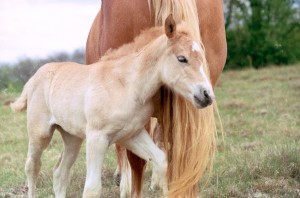
So the answer to the question “What Kind of Friend was She?” is…. the Best Friend. Thanks for keeping the faith and the horse Janet. The featured photo at the top of this post is that horse.
Attitudes to food and eating influence the quality of life wherever you live. The people of Finland lived through a terrible time during the 2nd World War that is only dimly understood by those of us born and raised in North America. The lasting legacy of this was brought home to me when I lived in Finland for a period in the early seventies. I was visiting an elderly couple who had known my then boyfriend since he was a child.
Our visit to their simple country home was unannounced and greeted with unintelligible cries of joy and great excitement. We were seated in places of honour in the parlour and invited to have a few refreshments with them. The wife had fond memories of my friend’s childhood love of fried egg sandwiches and she announced that she would prepare this treat for us. I understood little Finnish and my friend understood only a little more, so the conversation was pretty much one sided, accompanied by beaming faces and much bustling of food preparation.
Family Outhouse
While this was going on my friend invited me outside to view the outhouse – partly for entertainment and partly so that if the need arose, I would be aware of the location of the facilities. This building was truly a marvel as it was much larger than the conventional outhouses of my experience which were built for single occupancy. It was octagonal in shape and clearly designed for a large family. here were 8 stations in the plain smooth wood platform, each provided with its pile of farming magazines and sheets of newspaper on a string for purposes of hygiene. Two of the places had a raised step in front to accommodate smaller children. Beside every hole was a tin can of lime for sprinkling through the opening after a visit.
The walls were decorated with magazine pages lovingly pinned onto the simple wooden structure. I imagine that in the frigid Finnish winter the experience would have been breathtaking and as brief as nature would allow, as in the summer when the smell generated by the heat would have provided the disincentive to linger.
Finnish Hospitality
The aroma of frying butter greeted us as we sat down in our places and were presented with plates to hold on our lap. There was no place for us at the table as it was completely covered with food. Before we could proceed to the groaning buffet spread before us (and we were expected to move on to this feast) we first had to eat the fried egg sandwiches.
These were made over the open fire using a metal device with a hinged cup held by two long metal rods with a wooden handle on each. The two slices of white bread (buttered sides against the metal cup sides) were placed one in each half of the cup, with an egg on one half. When the second half was closed over the first, the sharp metal sides of the device cut off the crusts and enclosed the buttered bread and egg making a perfect round which cooked to golden perfection on the wood stove.
This kind and gentle farmer’s wife had prepared 28 of these for the two of us.
As I recall, I managed to eat no more than about 4 and my friend packed away a respectable 10 or more. We were forced to eat from the savory goodies on the table and then to proceed to eat sweet pastries. Before the afternoon was out I was glad that I knew the way to the privy.
During the war the Finnish people had suffered through a period of devastating hardship and had faced starvation on many occasions. After the war the country had struggled to repay a large war debt and rebuild their industry and infrastructure. This time of deprivation and shame had an effect that lingered long after the country had been restored to the place of respect and dignity that it deserved.
Every time any visitor came, hospitality had to be extended that showed that there was no longer any shortage of food. The fried egg sandwiches and groaning table laid for 2 young people were a symbol that demonstrated the overcoming of such formidable obstacles by this proud people. This same attitude is evident in the wonderful hospitality of all Finnish people, even today.